Western Australia electricity market explained
Western Australia is not on the National Electricity Market. Most South West Interconnected System households buy from Synergy, Horizon Power covers regional and remote systems, and retail choice is limited. Here is how the WEM, the SWIS and those two businesses actually fit together.
By Priya Nadesan · Published 2026-02-26 · Updated 2026-07-30
Type a Perth postcode into an east-coast comparison engine and you will be offered a story that does not apply. Western Australia is not in the National Electricity Market. There is no Default Market Offer, no Victorian Energy Compare, and no swarm of retailers competing for every house on the street. The main grid is the South West Interconnected System (SWIS). Wholesale energy on that grid is traded in the Wholesale Electricity Market (WEM). Most households on the SWIS buy from Synergy. Regional and remote towns off the SWIS are usually Horizon Power territory.
If you want the national map first, how electricity markets differ across Australian states sits beside this piece. What follows is the WA close-up.
The SWIS is a grid, not a brand
Who does what on the south-west grid
The South West Interconnected System is the wires and power stations that run from Kalbarri through Perth and the south-west, across to Kalgoorlie and down toward Albany. It is a single interconnected network, isolated from the east coast. You cannot send a Queensland electron to Fremantle.
On that network:
- Western Power is the network operator for the SWIS (the poles and meters in the south-west).
- Synergy is the state-owned retailer that supplies most SWIS households and a large share of small business, and a major generator.
- Other retailers participate in the WEM and can supply contestable customers — typically larger commercial and industrial sites above a consumption threshold set by WA policy.
- The Australian Energy Market Operator (AEMO) operates the WEM and related WA functions. That is the same agency name as on the NEM, running a different market.
Retail choice for a typical house is limited. Full residential retail contestability, the east-coast habit of changing brand for a two-cent saving, has not been the WA model. Policy reviews come and go. Until the rules on your tariff class actually change, shop what exists — published Synergy tariffs, any eligible contestable offers if you are over the threshold — and ignore a salesperson who is reading from a New South Wales script.
Horizon Power is not “regional Synergy”
Horizon Power is a separate state-owned business. It generates, distributes and retails in regional and remote systems that are not on the SWIS: the north-west, the Goldfields towns that sit off the main grid, Esperance’s system, and many smaller isolated networks. Some of those systems are tiny. Some are dominated by a mine, a town gas-diesel station, or a growing share of solar and batteries.
You do not “switch from Synergy to Horizon” as a consumer choice. You are connected to one system. A move from Perth to Hedland is a new connection on a different utility, closer to moving house electricity and gas connection than to an NEM retailer transfer.
Horizon’s tariffs, solar buyback, and concession processes are Horizon’s. Do not post a Synergy form to Karratha and wait.
The WEM is not the NEM with a lag
The Wholesale Electricity Market is how generators and retailers on the SWIS trade energy. It has been rebuilt in stages toward a more conventional scheduled, security-constrained design, with capacity arrangements that are not a carbon copy of the NEM’s. The details matter to power stations and to the Economic Regulation Authority, which regulates aspects of the WA regime. They matter to a household only as the backdrop to why electricity prices change — fuel, plant outages, network investment, and the cost of keeping an isolated grid stable.
What households should not do is import NEM vocabulary uncritically:
- The Default Market Offer is an east-coast instrument. See the Default Market Offer explained if you moved from NSW or South Australia; then put it away.
- The Victorian Default Offer is Victoria’s. Irrelevant in Bunbury.
- Energy Made Easy does not price a standard Synergy residential tariff as if it were a contestable NEM offer.
AEMO’s WA electricity pages, the ERA, Synergy’s published tariffs, and Horizon’s published tariffs are the primary sources. Retailer blogs from the east coast are not.
What a WA household can still compare
Limited retail choice is not the same as “the bill is a mystery”. You can still:
- Read the tariff class. A standard residential A1-style product (names get redesigned; check the current Synergy tariff schedule) is a different beast to a time-of-use product. Time-of-use versus single-rate tariffs is the national explainer; overlay it on the actual WA time windows, which are not Sydney’s.
- Check controlled load / off-peak for hot water if the meter and wiring support it — off-peak and controlled load electricity.
- Price solar buyback as an export rate, then ignore it if you are home in the day and should be self-consuming. Solar feed-in tariffs explained and best electricity plans for solar households are east-coast framed; the self-consumption arithmetic is the same. WA has had REBS-style buyback and successor products. The current cents are on the Synergy or Horizon page, not in this paragraph.
- Treat a home battery as an investment case against WA’s import and export rates, not against a Victorian Solar Sharer slogan. Is a home battery worth it in Australia is the framework; plug in WA numbers.
- Claim concessions. WA’s Energy Assistance Payment and related products are for eligible Pensioner Concession Card, Health Care Card and DVA cardholders, with medical-climate help under a thermoregulatory pathway. Amounts change. Energy concessions and rebates by state flags the idea; the current WA page has this year’s figure.
Smart meters are rolling through Western Power’s network on a program, not on the same mandated timetable as Victoria’s. Smart meters explained still helps you read the device. Time-of-use only works if the meter can record it.
Contestability, when it actually exists
WA has retail contestability above a consumption threshold. Large businesses, some commercial sites, and customers who use enough electricity in a year can choose among licensed retailers and negotiate. That world looks more like small business electricity contracts explained than like a household fact sheet: benefit periods, demand charges, brokers, and contract terms.
If you are a café on a residential-style small-use tariff, you are probably not in that club. If you are a cold store, a processor, or a site the account manager already calls “contestable”, get interval data and treat the quote as a contract. How to switch business energy retailers describes the contestable-market transfer idea. On the SWIS, confirm you are actually eligible before you authorise a broker. Supply still should not interrupt because a large contestable customer changes retailer; the network remains Western Power. Horizon systems are a different question — you are usually still inside one vertically integrated utility.
Brokers who fly in from the east coast are not illegal. They are also not a substitute for reading the WA licence list. Ask who pays them.
Solar, EVs and the isolated-grid problem
The SWIS has a rooftop solar density that operators have to take seriously at midday. That is why export limits, inverter requirements and “solar sponge” thinking show up in WA tariff design. A high buyback rate that encourages export at noon can be at odds with what the grid needs. A time-of-use tariff that is cheap in the middle of the day is often the honest signal.
If you drive an electric vehicle, daytime charging on solar, or charging in the cheap TOU window, beats plugging in at 6 pm on a peak rate. Electric vehicle home charging tariffs is the tariff logic. It is not a charger review. Three-phase supply is common on larger WA blocks and farms; it changes what a wall charger can draw, and it can change the network tariff conversation with Western Power or Horizon.
The Solar Sharer Offer is a Commonwealth-era east-coast product idea. Do not assume a Perth retailer is running it. See the Solar Sharer Offer explained only as context for what other grids are trying.
Complaints, hardship and the rest of civic life
Synergy and Horizon Power still have hardship policies. Disconnection for non-payment still has rules. Energy hardship programs in Australia is the national walkthrough; use the WA ombudsman and the WA concession pages rather than EWON. The National Debt Helpline on 1800 007 007 still finds a financial counsellor in Perth, Broome or Albany.
For a bill that looks wrong, how to dispute an energy bill still applies: in writing, keep paying the undisputed part, then the Energy Ombudsman Western Australia. How to read your electricity bill is easier when you know the tariff schedule the line items are drawn from.
Emergency supply is Western Power on the SWIS and Horizon Power off it — not a retail billing number.
A short WA checklist
- You are almost certainly on the SWIS with Synergy, or off it with Horizon Power.
- You are not on the NEM. East-coast comparison sites are a tourist brochure.
- Retail choice is limited for households. Contestability is a threshold, not a slogan.
- Compare the published WA tariffs you can actually go onto.
- Claim concessions on the WA rules. Check this year’s amount on the state page.
- Large sites: negotiate like a business, with interval data.
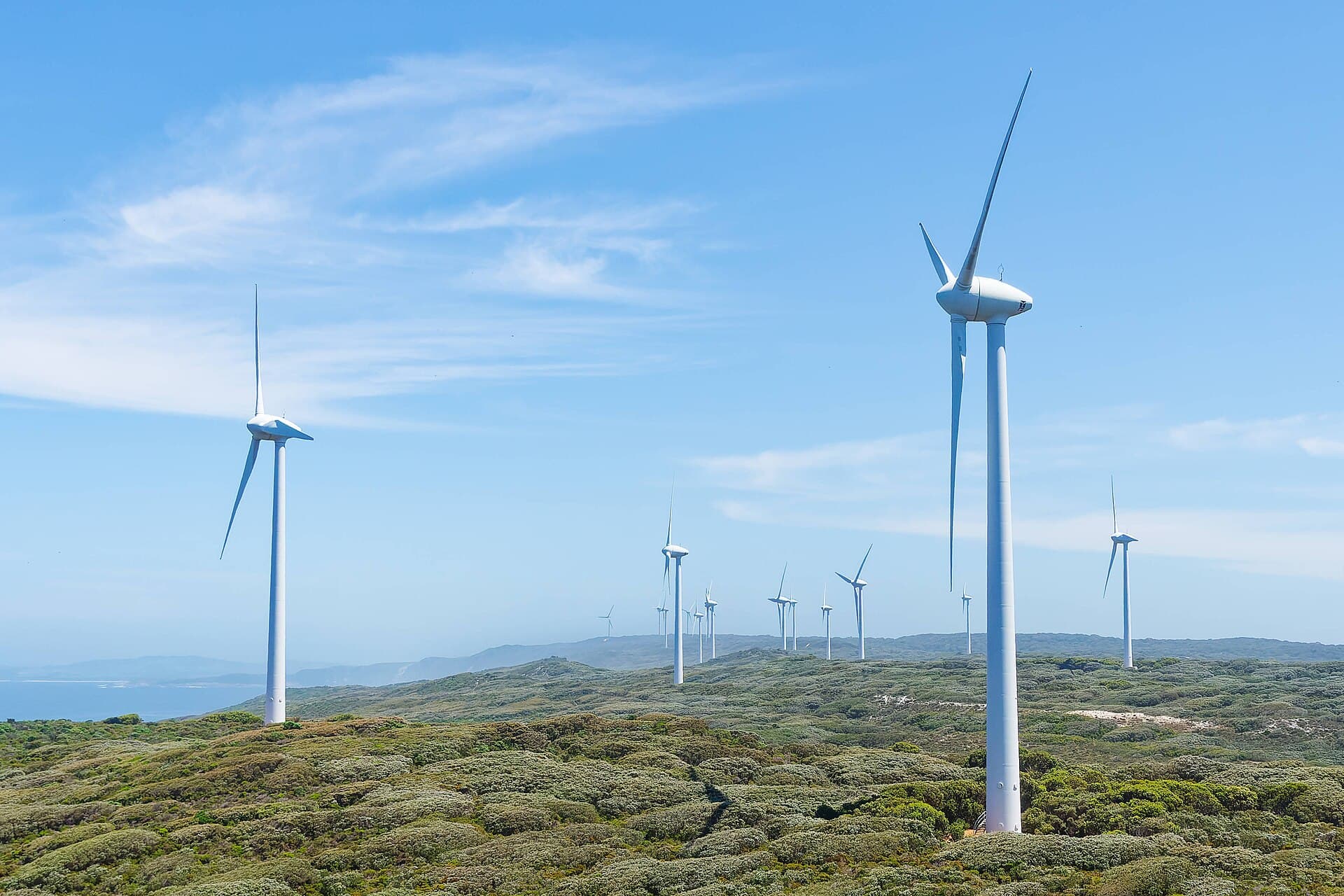
The Albany turbines sit on a grid that has to keep itself alive without a Basslink or a QNI interconnect. That isolation is the whole plot. The right documents are the WA ones.
Frequently asked questions
Can I choose my electricity retailer in Western Australia?
Most WA households cannot. On the South West Interconnected System, Synergy supplies the large majority of homes and many small businesses on regulated residential tariffs. Customers above the contestability threshold have more retailer choice. Horizon Power serves regional and remote systems outside the SWIS, as a vertically integrated business. Do not expect an east-coast style switch.
Is Western Australia part of the National Electricity Market?
No. The NEM is the interconnected east-coast and Tasmanian system. WA’s main grid is the South West Interconnected System, with wholesale trading in the Wholesale Electricity Market. AEMO operates WA functions under a different set of rules. The Default Market Offer does not apply.
What is the difference between Synergy and Horizon Power?
Synergy is the state-owned retailer (and a major generator) for most customers on the SWIS, from Perth through the south-west. Horizon Power generates, networks and retails in regional and remote towns that are not on the SWIS. You do not choose between them as if they were competing NEM brands; you are on one system or the other.
Do WA homes have time-of-use and solar feed-in products?
Yes, within the regulated and published tariff set. Synergy offers time-of-use and solar buyback arrangements that are not the same as east-coast market offers. Horizon Power has its own tariffs and solar rules. Compare what exists on the WA tariff pages, not a Sydney fact sheet.
Where do I go for a concession or a bill dispute in WA?
Claim concessions through the WA process and your retailer — Synergy or Horizon Power. The Energy Ombudsman Western Australia handles many retail complaints. Hardship policies still exist. The National Debt Helpline on 1800 007 007 can find a financial counsellor. East-coast ombudsman brands will not take a Perth bill.