Solar Sharer Offer explained
The Solar Sharer Offer is an opt-in standing offer in Default Market Offer areas: a three-hour midday window of free electricity for eligible smart-meter households, up to a daily cap commonly described as 24 kWh. It exists because the grid is stuffed with daytime solar.
By Tom Berryman · Published 2026-07-08 · Updated 2026-10-18
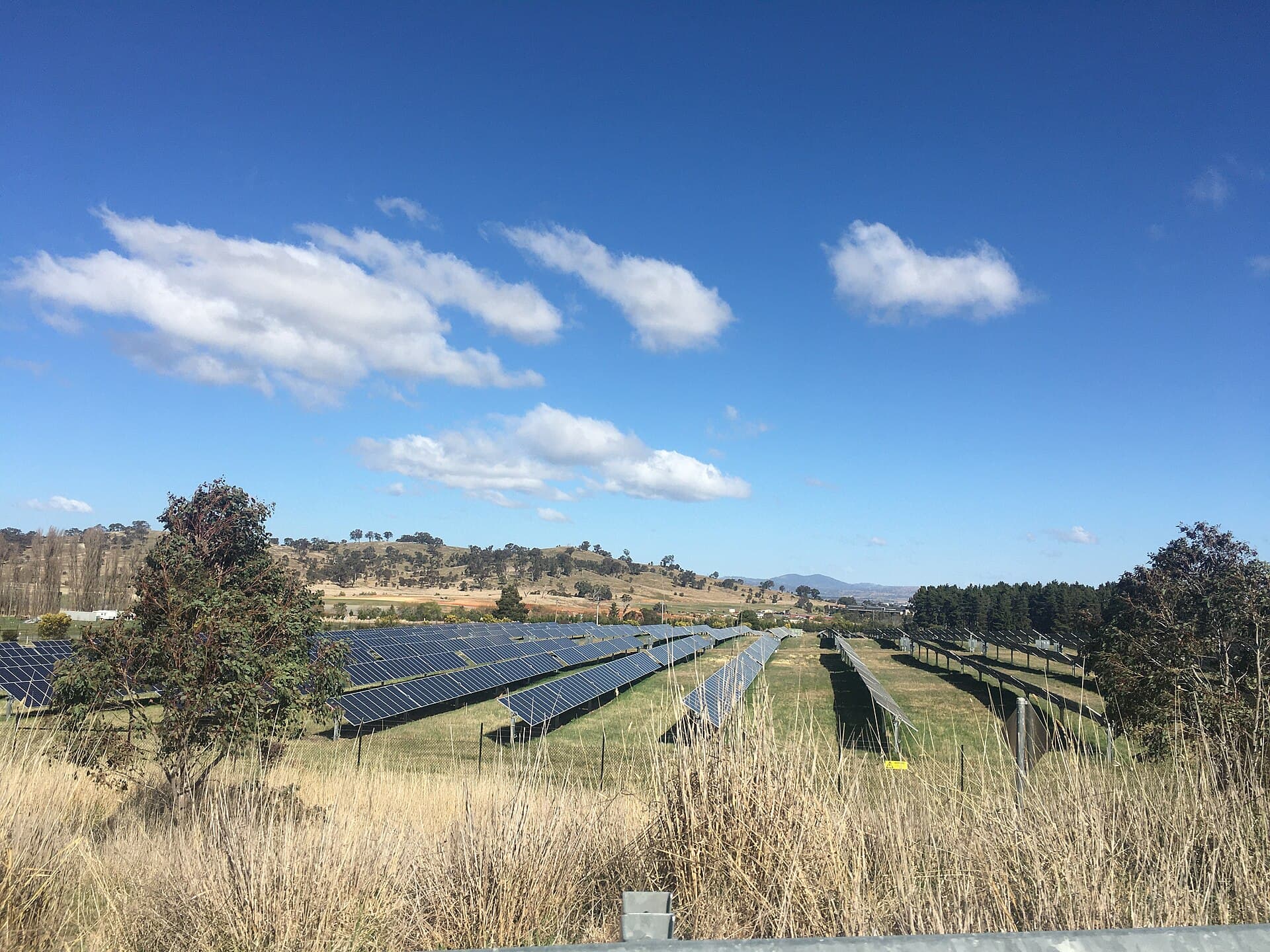
The Solar Sharer Offer (SSO) is the rare electricity product that is easier to understand as physics than as marketing. In the middle of the day the National Electricity Market is often drowning in rooftop and utility-scale solar. Wholesale prices sag. In the evening the solar drops off and everyone puts the oven on. The SSO is a regulated attempt to move household load into the glut, by making a three-hour slice of usage free for people who opt in.
It is not a rebate. It is not automatic. It is not available in every state. It is a standing offer with a free window, built inside the Default Market Offer rules, and it started for eligible customers from 1 July 2026.
If you live in Victoria, stop. Victoria has the Victorian Default Offer, not the DMO. There is no Solar Sharer standing offer under the AER’s DMO determination for Victorian meters. If you live in Western Australia, the Northern Territory, regional Queensland outside Energex, or on many embedded networks, the same warning applies. How electricity markets differ across Australian states is the first filter.
Who can actually get it
The official eligibility list is short, and the footnotes matter.
- You are a residential customer in a DMO distribution area: Ausgrid, Endeavour Energy or Essential Energy in New South Wales; Energex in south-east Queensland; SA Power Networks in South Australia.
- You have a household smart meter. Interval data is how the free window is billed. An accumulation meter cannot do this product. If you do not have one, ask the retailer about a meter upgrade and any fee. Smart meters are the plumbing.
- You are not supplied through an embedded network (many apartment blocks, some caravan parks). Those sites have a different seller and a different set of rights.
- Your retailer is one of the businesses required to offer the SSO — generally retailers with more than 1,000 customers across DMO regions. A tiny retailer may not have a Solar Sharer product. A large one must.
You do not need rooftop solar. Renters can opt in. Owners without panels can opt in. The name is about sharing the system’s solar, not about owning modules.
You do need to opt in. Nobody should be dumped onto Solar Sharer in silence. It is a plan change, with the usual consumer protections, including cooling-off on most unsolicited sales.
The midday window and the 24 kWh cap
The AER sets the free hours. Retailers do not get to invent a window that suits their trading desk.
- New South Wales and south-east Queensland: 11 am to 2 pm local time.
- South Australia: 12 pm to 3 pm local time.
The hours are local, including daylight time where it applies. Essential Energy’s sprawling network includes pockets that run on South Australian or Queensland time; the free period still starts at 11 am local for those New South Wales-labelled sites.
Free is not infinite. The product is commonly described as up to 24 kWh of free electricity during that window each day. Twenty-four kilowatt hours in three hours is a lot of household load — more than enough for a heat pump, a washer, a dryer and a car charger if they coincide. It is also a cap. Usage in the window above the cap can be charged at the published residual rate. Some retailers average the cap across a billing period rather than clipping you at 24.01 kWh on a single Tuesday. Read the fact sheet for the averaging rule. Do not assume the generous version.
You still pay:
- the daily supply charge
- usage outside the three hours
- controlled load, if you have a dedicated hot-water or slab circuit
- any residual rate for window usage above the cap
A household that treats “free power” as “the bill is zero” will be disappointed on day one.
Why it exists
Rooftop solar has changed the daily shape of the grid. The middle of the day can be so well supplied that wholesale prices print low, even negative. The evening still needs gas, hydro, storage and whatever coal is left. Networks also dislike sudden ramps.
Policy makers would rather you boiled the house’s water and charged the car at noon than at 6.30 pm. A feed-in tariff tries to value exports. Solar Sharer tries to value imports at the right time. That is why the offer is useful to people who have never owned a panel. They are being paid, in kind, to soak up someone else’s solar.
It is also why the product is a standing offer with AER-set structure rather than a one-week marketing special. Retailers with scale have to make it available. They can still sell you a market offer they prefer. Compare both.
How it interacts with rooftop solar
If you already have panels, midday is when you need the grid least. The array covers the dishwasher. Exports spill out at a feed-in tariff that may be 0c in Victoria — irrelevant here — or a few cents in a DMO state. The free window then pays you 0c to import energy you were not importing.
Solar Sharer still has uses on a solar roof.
- Clouds and short systems. A 3 kW array on a two-storey terrace will not cover a heat pump. The free window will.
- Export limits. If the distributor has clipped your export, you cannot dump surplus. You can still import for free and run a bigger midday load.
- Guests, work-from-home, school holidays. The days your consumption jumps at 1 pm are the days the window earns its keep.
- A second meter use. An EV that is home at lunch, or a battery that is allowed to charge from the grid, turns free imports into evening energy.
What you should not do is add a headline feed-in from a market offer to Solar Sharer’s free window and call it one plan. They are different contracts. Run two estimates on Energy Made Easy: your best market solar plan, and Solar Sharer. Keep the lower annual cost.
A solar household on a generous market feed-in with a cheap evening rate can still beat Solar Sharer. A solar household on a poor market offer with a savage peak rate may not. The panels do not decide. The residual evening tariff does.
How it interacts with batteries and EVs
A home battery is the cleanest way to move free midday energy into the evening peak. Charge from the array first; if the battery still has room, charge from the free window if the hybrid inverter and the retailer’s rules allow grid charging. Discharge from 4 pm. That is Solar Sharer working as designed.
Check three traps.
- Some battery warranties or VPP contracts frown on regular grid charging. Get it in writing.
- A battery that is already full by 11 am from the roof cannot eat the free window. You have a surplus problem, not a Solar Sharer problem.
- Inverters that cannot import on a timer will sit there while the free hours go past.
An electric vehicle is the same logic with a bigger appetite. A 7 kW charger for three hours is 21 kWh — inside a 24 kWh cap if little else is running, over it if the air-conditioner is also on. EV home-charging tariffs are the longer conversation; Solar Sharer is one of the tariffs worth putting in that conversation if you live in a DMO area and the car is actually home at noon.
How to decide, in practice
Pull interval data if you have it. Highlight 11 am–2 pm (or noon–3 pm). Ask a dull question: how many kilowatt hours do I already use in that window, and how many could I move without becoming a monster to live with?
- If the answer is “almost none, and I cannot move any”, Solar Sharer is a standing offer with a feature you will not use. Compare it only as a standing offer, which is often not the cheapest shape.
- If the answer is “8–15 kWh if I timer the hot water, the laundry and the car”, run the government comparator and take the estimate seriously.
- If you are on time-of-use already, you already have a cheap midday. Solar Sharer makes that slice free, but may raise the rest of the clock. Compare the whole year.
Retailers required to offer the SSO must still publish a fact sheet. Use Energy Made Easy, not a hold-music summary. Confirm the cap averaging rule, the residual rates, and that your meter is in the DMO area the tool thinks it is.
The offer will be judged, over the next few summers, on whether households actually shifted load or just collected a slogan. Your job is narrower. If the free window matches a machine you can switch on, take it. If it matches a roof that is already doing that job, keep shopping. The glut in the middle of the day is real either way. You only get paid for it if you can swallow some of it.
Frequently asked questions
What is the Solar Sharer Offer?
The Solar Sharer Offer is an opt-in electricity standing offer in Default Market Offer areas. Eligible households with a smart meter get a three-hour midday window of free usage, commonly described as up to 24 kWh a day, and pay ordinary standing-offer rates outside that window plus the daily supply charge.
Who is eligible for Solar Sharer?
Residential customers in New South Wales, south-east Queensland and South Australia who have a household smart meter, are not in an embedded network, and whose retailer is required to offer the product. You do not need rooftop solar. Victoria, Western Australia, Tasmania and the Northern Territory are outside the DMO Solar Sharer framework.
What are the free midday hours?
In New South Wales and south-east Queensland the free window is 11 am to 2 pm local time. In South Australia it is 12 pm to 3 pm local time. The Australian Energy Regulator sets those hours. Retailers cannot pick their own window on the standing Solar Sharer Offer.
Do I still pay a bill on Solar Sharer?
Yes. The daily supply charge continues, usage outside the window is charged, controlled load is charged, and usage above the daily free cap can be charged. Free is the usage component inside the window, up to the cap, not the whole account.
Should solar households join Solar Sharer?
Only if the free window is useful. If your panels already cover midday load, you may gain little and then pay standing-offer rates in the evening. If you can charge a battery, an EV or a heat pump in the window, it can beat a market offer with a pretty feed-in tariff.