Smart meters explained for Australian households
Smart meters record interval usage, send remote reads and unlock time-of-use and demand tariffs. Victoria finished its rollout years ago; the rest of the NEM is catching up.
By Elise Hart · Published 2026-04-02 · Updated 2026-09-24
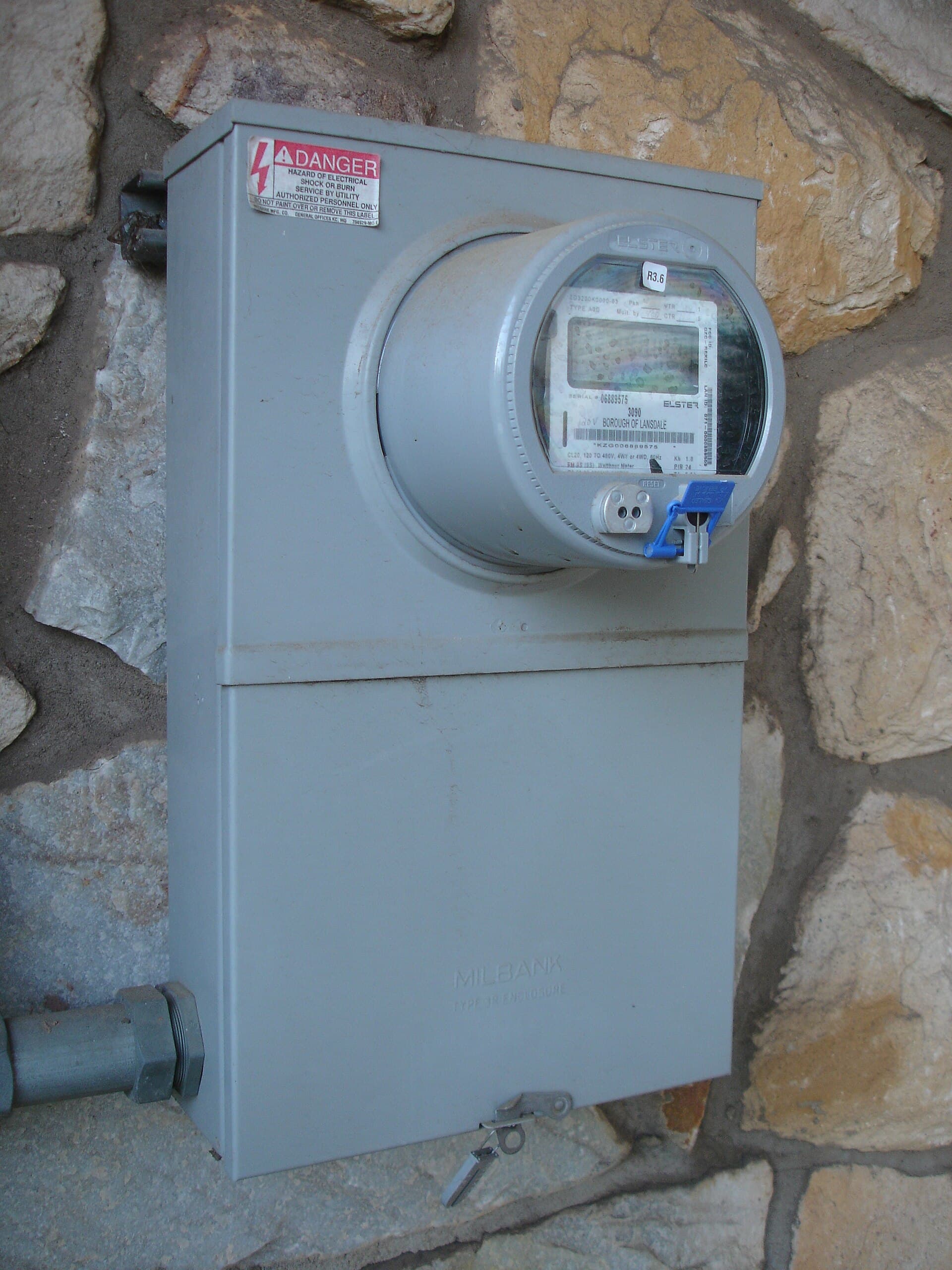
A smart meter is a digital electricity meter that records when you use power, not just how much has flowed since 1987. In industry language it is usually a Type 4 meter, or in Victoria a remotely read Type 5 leftover from that state's advanced metering program. For a household, the useful facts are simpler: it can be read from afar, it stores interval data, and it is the reason your next plan might be time-of-use, demand, or a controlled-load experiment you did not ask for.
It is still a meter on the wall. It does not make the retailer cheaper. It does not fix a leaky duct. It changes the quality of the evidence on your electricity bill.
Interval data and remote reads
A basic accumulation meter is a running total. A reader visits, subtracts the last number, and the retailer calls that "usage". A smart meter slices the same energy into intervals — commonly 30 minutes, sometimes 15 or 5 — and keeps the series.
That series is why:
- Estimated bills become less common, because the meter can report in.
- Time-of-use tariffs can bill evening peaks separately from overnight troughs.
- Demand tariffs can charge you for a short spike, not only for kilowatt hours.
- Solar exports can be matched to the same clock as imports.
- Disputes can be checked against a graph instead of a shrug.
Remote reads travel over the mobile network, a mesh, or another communications path to the metering coordinator, then into the market. If communications drop, you can still get an estimate. A smart meter is not magic; it is a computer in a box, on a suburban wall, in Australian weather.
When a reader no longer needs to enter the backyard, the dog problem shrinks. The privacy problem grows a little, which we will come back to.
Time-of-use, demand and the tariff that follows the meter
Retailers could always invent a time-of-use product. Without interval data they could not bill it fairly. Once the meter can tell 6pm from 1pm, the network tariff and the retail offer often shift.
That is not automatically bad. Households that can push a dishwasher, pool pump or EV charger into the cheap window can beat a flat rate. Households that cook at 6.30pm, heat at 7pm and charge a car on the same circuit can lose.
Demand charges are the sharper edge. Instead of paying only for energy, you also pay for the highest interval (or the average of several peaks) in the month, in kilowatts. One oven, one air-conditioner and a hot-water boost at the same time can set the charge. Interval data makes that visible. It also makes it punishable.
Controlled load is a different beast: a dedicated circuit the distributor switches. A smart meter can sit beside controlled load, replace the old off-peak meter, or, on some networks, reprogram how that circuit is switched. If a meter swap notice mentions "tariff reassignment", read it. The hardware change and the price change are related, not identical.
Victoria already did this. Other states are still doing it.
Victoria ran a government-directed advanced metering infrastructure rollout from the late 2000s, largely complete around 2013. Victorian homes were not waiting for a 2020s fashion. Almost all small customers already have a remotely read meter, and Victorian Energy Compare, network tariffs and retailer products grew up around that fact. The politics were loud at the time — cost recovery, supposed in-home displays, early time-of-use experiments — and some of that distrust never left.
New South Wales, south-east Queensland, South Australia, Tasmania and the ACT took a different path: retailer-led deployment, accelerated by Australian Energy Market Commission rules that aim for universal smart meters by 2030. Legacy accumulation meters (and some older interval meters without remote reads) are supposed to be replaced on a schedule, through Legacy Meter Replacement Plans that distributors publish and retailers have to follow.
Tasmania was already well advanced. Western Australia and the Northern Territory are not in the National Electricity Market and do not ride that 2030 rule. WA households on Synergy should not expect an east-coast switching-and-metering story.
If your neighbour in Melbourne has had a smart meter for a decade and your cousin in Newcastle is only getting one now, that is policy history, not a glitch.
Customer rights when a meter is swapped
A scheduled replacement is not a door-knock sales pitch, but it is still work on your property. Practical rights and expectations:
- You should get notice that a metering provider is coming, with a window, not a rumour.
- Someone needs safe access. If the meter is locked behind a gate, say so before the crew bills a wasted visit.
- Ask whether the retail tariff structure will change. Under the accelerated-deployment rules, retailers generally need explicit informed consent before moving you onto a different structure after an upgrade, and that protection is designed to last two years. It is not a forever freeze. Switching retailer or moving house can drop you out of that pocket of protection, which is a reason to read the fact sheet when you switch electricity retailers.
- Life-support customers need the site treated as such. Tell the retailer before the appointment.
- If the power must be isolated for the swap, that is a short outage, not a transfer of retailer.
You should not be bounced into a demand tariff in the small print of a "meter upgrade complete" email. If that happens, complain to the retailer. If the complaint dies, use EWON, EWOV, EWOQ, EWOSA, Energy Ombudsman Tasmania, or the ACAT pathway in the ACT.
Costs are easy to misunderstand. The national policy intent of the accelerated rollout is that households are not slapped with a surprise invoice for a standard replacement, with costs recovered in the ordinary stack of network and retail charges. Non-standard work — moving a meter, fixing a dangerous board, after-hours appointments you requested — can still attract fees. Get a quote in writing.
In-home displays, apps and whether you need a gadget
The original Victorian pitch included in-home displays: a little screen talking to the meter over a home area network, showing cents ticking up. Plenty of those screens never landed, or landed and went into a drawer.
Today, most people who watch usage do it through:
- A retailer app pulling the same interval data.
- A solar inverter or battery portal.
- A third-party device on the meter tail or CT clamps, which is a different product again.
An in-home display can still be useful if you like a kitchen-counter reminder and your metering provider actually enables the HAN. It is not required to "activate" the smart meter. The meter is already recording. The display is a loudspeaker.
If a salesperson ties a display, a "free" app and a new retail contract together, separate the three. You can keep the meter and reject the contract during the 10 business day cooling-off period.
Privacy of consumption data
Interval data is intimate in a dull way. It can show when a house is empty, when shift workers come home, when a medical device runs. Treat it as personal information, because that is what it is.
Who has a legitimate need:
- The retailer, to bill you.
- The distributor, to run the network.
- The metering coordinator / provider, to operate the meter.
- Market institutions, in the de-identified or permissioned forms the rules allow.
Who should only see it with your consent: comparison sites, "we will find you a better deal" brokers, virtual-power-plant apps, and anyone else who is not your retailer. Consent should say what they take, how long they keep it, and whether it is on-sold.
You can usually request your own metering data from the retailer. If you are preparing a dispute or a solar-versus-tariff spreadsheet, ask for the interval file, not a one-line total. If a company refuses to say whether it stores your NMI against a marketing list, that is an answer.
Smart meters do not put a camera in the kitchen. They do put a timestamp on the kettle. That is enough to be careful, and not enough to panic.
What to do with a smart meter once you have one
Use the data. Compare a year of intervals on Energy Made Easy or Victorian Energy Compare rather than a guess. See whether your peaks are behavioural or structural. If they are structural — medical cooling, a badly timed controlled-load boost, a battery that discharges into a dinner spike — change the plan or the wiring, not just the font on the bill.
And remember the unfashionable truth: a smart meter on a bad retail offer is still a bad offer. The meter just itemises the damage.
Frequently asked questions
What does a smart meter actually record?
A digital interval meter stores usage in short time blocks, often 5, 15 or 30 minutes, and can send those reads remotely. That is what lets retailers bill peak and off-peak accurately and drop most estimated bills.
Did Victoria already roll out smart meters?
Yes. Victoria ran a government-mandated advanced metering program in the late 2000s and early 2010s, so almost all Victorian homes already have a remotely read meter. Other National Electricity Market states are now on a retailer-led path targeting universal uptake by 2030.
Can my retailer put me on a demand tariff the day a smart meter goes in?
Not as a surprise, if the current rules are followed. After a smart-meter upgrade, retailers generally need your explicit informed consent before changing the retail tariff structure, with a protection period that can last two years unless you switch retailer or move house.
Do I need an in-home display?
No. Some meters can talk to a home-area-network display, but most households now watch usage through a retailer app or a solar inverter portal. An in-home display is optional hardware, not the definition of a smart meter.
Who can see my smart-meter data?
Retailers, distributors and metering providers need consumption data to bill and run the network. It is personal information. Third-party comparison or 'energy manager' apps should only get it with your consent. Ask who they share it with.