Demand tariffs explained in Australia
A demand tariff charges you for a short spike in power as well as for the kilowatt hours you use across the month. One hot afternoon with the air-conditioner and the oven on can set a capacity charge that follows you until the next billing cycle.
By Elise Hart · Published 2026-04-08 · Updated 2026-09-22
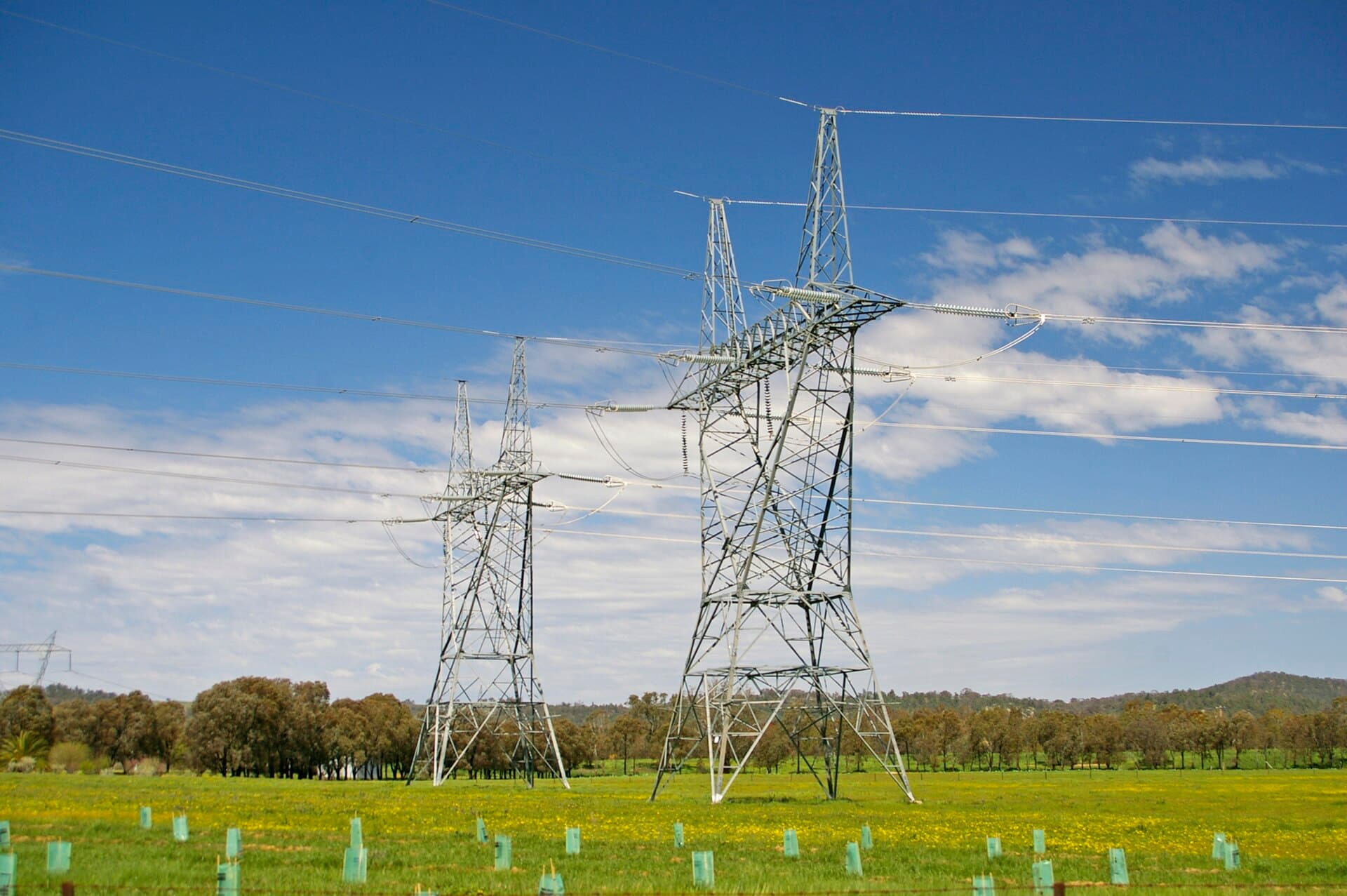
A demand tariff is the electricity product that makes people feel as if they have been billed for something they did not buy. They did buy it. They bought capacity: a short, sharp draw on the grid. The distributor builds poles, wires and zone substations for that spike, not for your annual average. A demand charge is how some networks pass a slice of that cost to the houses that cause it.
The rest of the bill still looks familiar. You pay a usage rate per kilowatt hour, perhaps split into peak and off-peak. You pay a daily supply charge. Then a third line appears: demand, measured in kilowatts (kW), not kilowatt hours (kWh). Confusing those two units is how a $2-looking number becomes a $40 line item.
This article is about household and small-business retail plans that pass through a network demand tariff. It is not a large-industrial kVA story, and it is not a recommendation of any retailer.
Kilowatts versus kilowatt hours
A kilowatt hour is energy. A 2 kW heater running for three hours uses 6 kWh. That is what a single-rate or time-of-use usage charge bills.
A kilowatt is power: how hard you are drawing at a moment in time. Ten 2 kW appliances turned on together are a 20 kW demand, even if you only leave them on for 20 minutes. Energy used might be small. The spike is not.
Demand tariffs bill some combination of:
- your maximum demand in a defined window (for example 3 pm to 9 pm on workdays)
- measured as the highest 15-minute or 30-minute average in that window
- multiplied by a rate in dollars per kilowatt per day, per month, or per billing cycle
If the rate is $8 per kW per month and your peak interval was 7 kW, the demand line is $56 for the month, regardless of whether you repeated that spike on other days. Some networks reset each month. Some look at a longer season. Some charge demand only in summer. The fact sheet and the distributor's network tariff document are the source, not a neighbour's bill from a different network.
A worked picture, without pretending it is your house:
- 4 pm, 38 degrees. Reverse-cycle air-conditioning drawing about 3.5 kW.
- Oven on at 4:10 pm, another 2.2 kW.
- Instantaneous electric water or a second split system, another 2 kW.
- For 20 minutes the interval average sits near 7.5 kW.
That 20 minutes can set the demand charge for the whole cycle. The rest of the month can be gentle. The meter has a long memory for the worst interval.
You cannot see this on an accumulation meter. You need a smart meter and, ideally, the interval file from your retailer's portal. How to read your electricity bill will show you where the demand line sits once it exists. If you cannot find kilowatts anywhere, you are probably not on a demand tariff yet — or the retailer has bundled it into a higher usage rate and not said so clearly.
How a 15- to 30-minute peak sets the charge
Distributors do not bill the single highest second. They average your draw over a short interval so that filling a kettle does not, by itself, reprice the month. The interval is still short enough that a shower-plus-oven-plus-air-con stack counts.
What usually matters:
- The window. Demand outside the window often does not count. Overnight EV charging may be free of demand even if the kW is high. Afternoon charging may be expensive.
- Workdays versus weekends. Many network demand windows ignore Sunday. A Saturday renovation with every power tool running may or may not count. Check.
- Season. A winter peak from a portable heater can set demand on some tariffs; others are summer-only.
- Import only. Rooftop solar reduces the grid draw in that interval. If the air-conditioner runs at 1 pm under a 5 kW array, measured demand can be near zero. At 6:30 pm the same air-conditioner is fully on the meter.
Retailers then wrap the network tariff in a market offer. Some pass the demand rate through plainly. Some flatten it into usage prices. Some offer a "demand" and a "non-demand" retail product on the same meter. How to compare electricity plans only works if the comparison site knows you are on a demand network tariff. Enter the NMI. If the site asks about demand, do not tick "single rate" because it looks simpler.
A demand charge is not a fine. It is not a sign you did something wrong. It is a price signal. Treat it like a time-of-use peak with a memory.
Air-conditioning and EV charging
Two household loads dominate demand stories in the 2020s: refrigerated air-conditioning and electric vehicle chargers.
A split system on a mild day is modest. A ducted system or two large splits on a 40-degree afternoon is not. Add a second indoor unit, an oven, and a clothes dryer "because it is already hot", and the interval average climbs. The remedy is dull and effective:
- Pre-cool the house earlier in the day, especially if you have solar.
- Set 24 or 25 degrees rather than 20.
- Do not start the oven and the dryer in the same half-hour as the cooling.
- Close rooms you are not using.
None of that requires a new retailer.
EV charging is a bigger lever because a typical wall charger is 7 kW on a single-phase house, and some three-phase chargers are higher. Plug in at 5:30 pm and you have added a small house on top of the existing house. Electric vehicle home charging tariffs sometimes offer a cheap overnight window. Use it. If the car must charge on arrival, drop the charge rate in the charger app to 8 or 16 amps until the demand window ends. You will still wake up with a usable battery on most commutes.
Solar helps only when it is producing. A Solar Sharer midday window is a good time to charge a car or run a pool pump, and it will usually sit outside the demand window. A home battery can clip the evening peak if it is configured to reserve a few kilowatt hours for the demand window rather than emptying itself at the first hint of evening. That is a setting, not a default. Whether a battery is worth it should include demand-charge savings where you actually pay them.
Small businesses with a café oven, a coolroom and a compressor that starts together see the same physics at a larger scale. Small business electricity contracts often include demand as a matter of course. Households are catching up because the meters can now measure it.
Whether you can opt out
This is the question that should come before any lifestyle lecture. Demand tariffs are spreading because distributors are reassigning network tariff codes when meters are replaced. The retailer then has to sell you a retail plan that fits that code, or seek a reassignment.
Whether you can opt out depends on:
- the distributor (Ausgrid is not Powercor; Energex is not SA Power Networks)
- whether the demand tariff is mandatory for your meter type and consumption
- whether a cost-reflective alternative exists, such as a time-of-use tariff without a demand component
- whether any retailer at your NMI still offers a single-rate market offer on that network tariff
There is no national "I refuse demand charges" button. There is also no rule that every smart-meter household must stay on demand. Plenty of customers are moved to a default demand network tariff and can request a reassignment to time-of-use. Others are stuck until they meet a threshold, or until the next tariff structure review.
Practical steps:
- Find the network tariff code on your bill. It is a short string, not the retail plan name.
- Ask the retailer, in writing, whether a non-demand network tariff is available at this NMI and what the retail plans look like on it.
- Run both options on Energy Made Easy or Victorian Energy Compare. A demand plan with a lower usage rate can still win if your measured kW stays low.
- If a meter swap is scheduled, ask before installation day what tariff you will land on.
Do not confuse opting out of demand with opting out of time-of-use. They are different products. Time-of-use versus single-rate tariffs is the comparison for the clock. Demand is the comparison for the spike.
If a door-to-door seller tells you they can "remove the demand charge" by switching retailer, ask them to show the network tariff code on the fact sheet. A retailer can hide a demand rate inside a higher flat usage price. That is not removal. It is a different bet. You generally have 10 business days to cool off from an unsolicited contract if you want to undo a bad explanation.
Demand tariffs are not a scam and they are not always a rip-off. They are a poorer fit for households that cannot stagger load — families that come home at the same hour, older houses with slow-to-heat interiors, anyone who must run medical cooling. They are a better fit for people who already have solar, a timer habit, or an EV that can wait until 10 pm. Compare the annual cost both ways, then decide whether changing the household is cheaper than changing the plan.
Frequently asked questions
What is a demand tariff on electricity?
A demand tariff adds a charge based on your highest electricity use in a short interval, measured in kilowatts, as well as the usual usage rates in kilowatt hours and the daily supply charge. The demand figure is typically your peak 15- or 30-minute average during the network's demand window.
Is a demand charge the same as a peak time-of-use rate?
No. Time-of-use changes the price of each kilowatt hour by the clock. A demand charge prices the height of your spike. You can be on a plan that has both a peak usage rate and a demand charge. They punish different behaviour.
Can I opt out of a demand tariff?
Sometimes. It depends on the distributor's network tariff rules and on what retail plans are offered at your NMI. After a smart-meter installation some networks assign a demand tariff by default but still allow a single-rate or time-of-use alternative. Ask the retailer to show the network tariff code, then check Victorian Energy Compare or Energy Made Easy.
How do I keep a demand charge down?
Avoid stacking large loads in the demand window. Do not run the oven, the clothes dryer and EV charging on top of air-conditioning on a hot weekday afternoon. Stagger start times. If you have solar, run dishwashers at noon instead. A battery can shave the peak if it is set up to do so.
Will an electric vehicle make demand charges worse?
It can, if the charger starts at full rate when you get home during the demand window. A 7 kW charger on top of a 4 kW air-conditioner is a large spike. Timer the charger to after the window, or use a lower charge rate. That is usually a bigger saving than shopping usage rates.